
Define the Grade and Supply Route
Review the standard and customer specification, then select project-appropriate material.
At Novin Industrial Group, the material route goes beyond melting. Material sourcing, segregated recycling, composition adjustment, spectrometric analysis, and approval of every melt are linked to die-cast production through a controlled process.
Project material may be prepared in-house through recycling and composition adjustment, purchased as standard ingot, or supplied by the customer. The route is selected according to the part specification and project requirements.
Common grades include BS 1490 LM2, the American grades 413.0 and 413.1 and JIS H 5302 ADC12; however, production is not limited to these examples, and other grades are assessed against the customer specification.
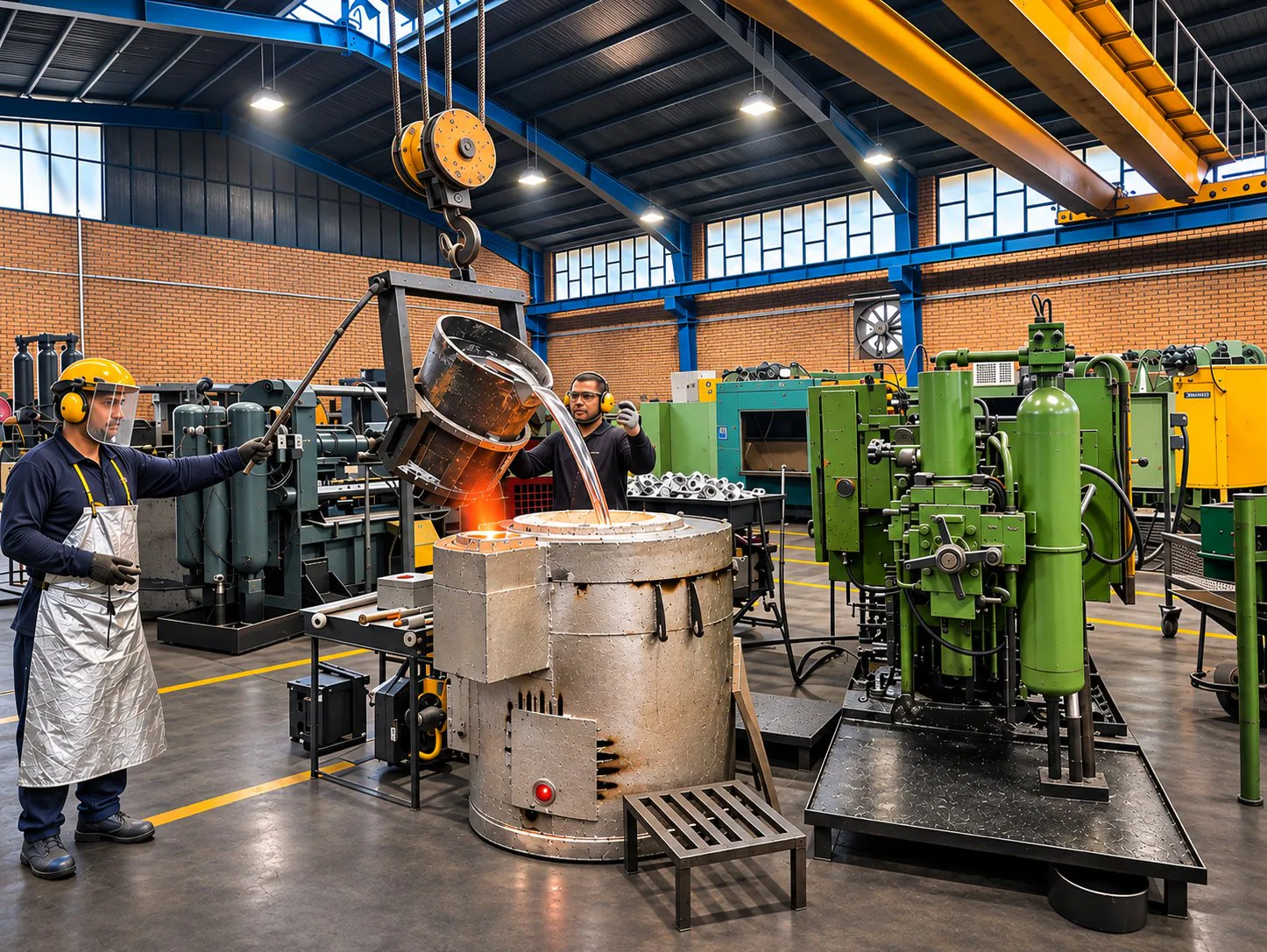
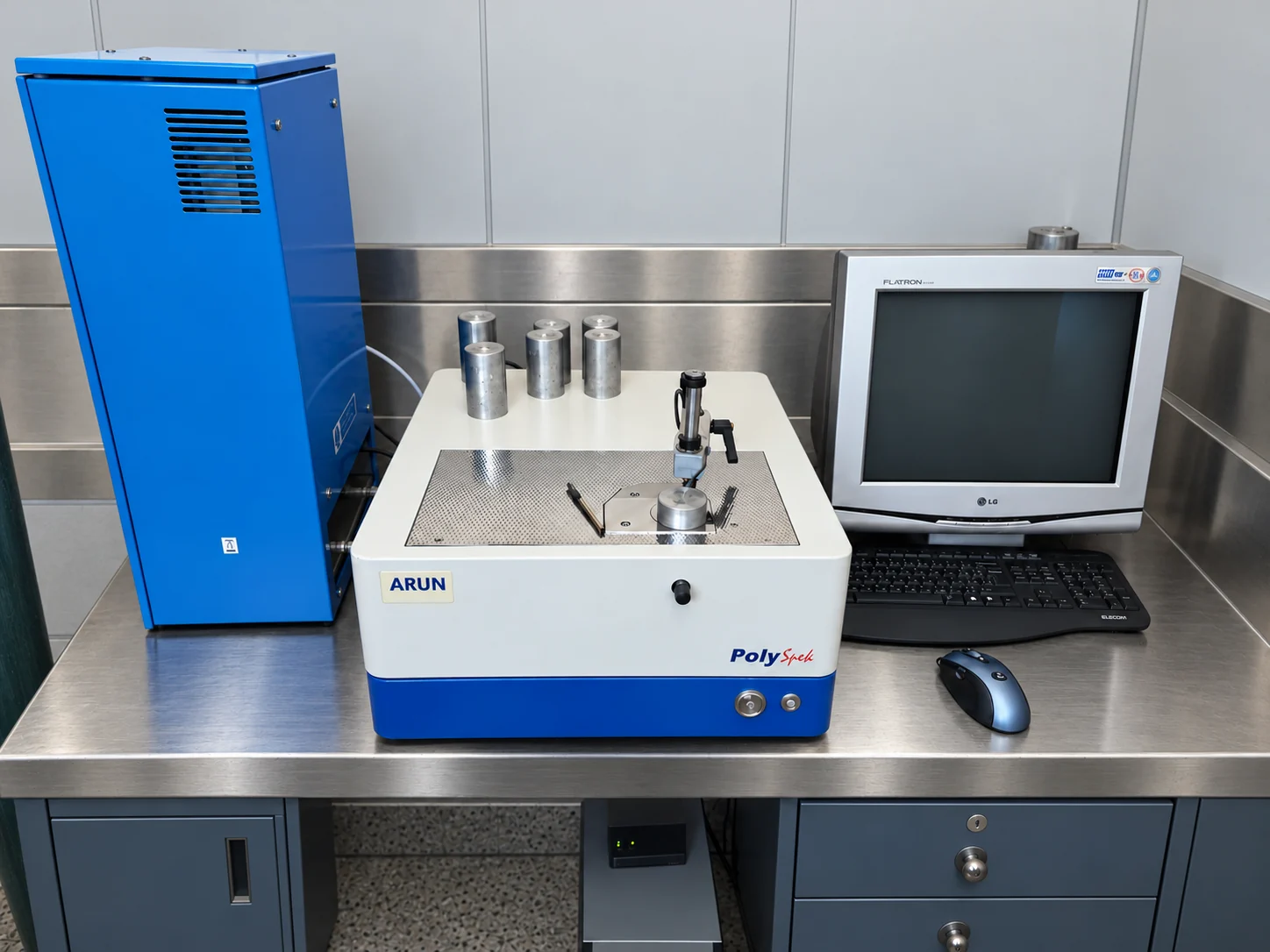
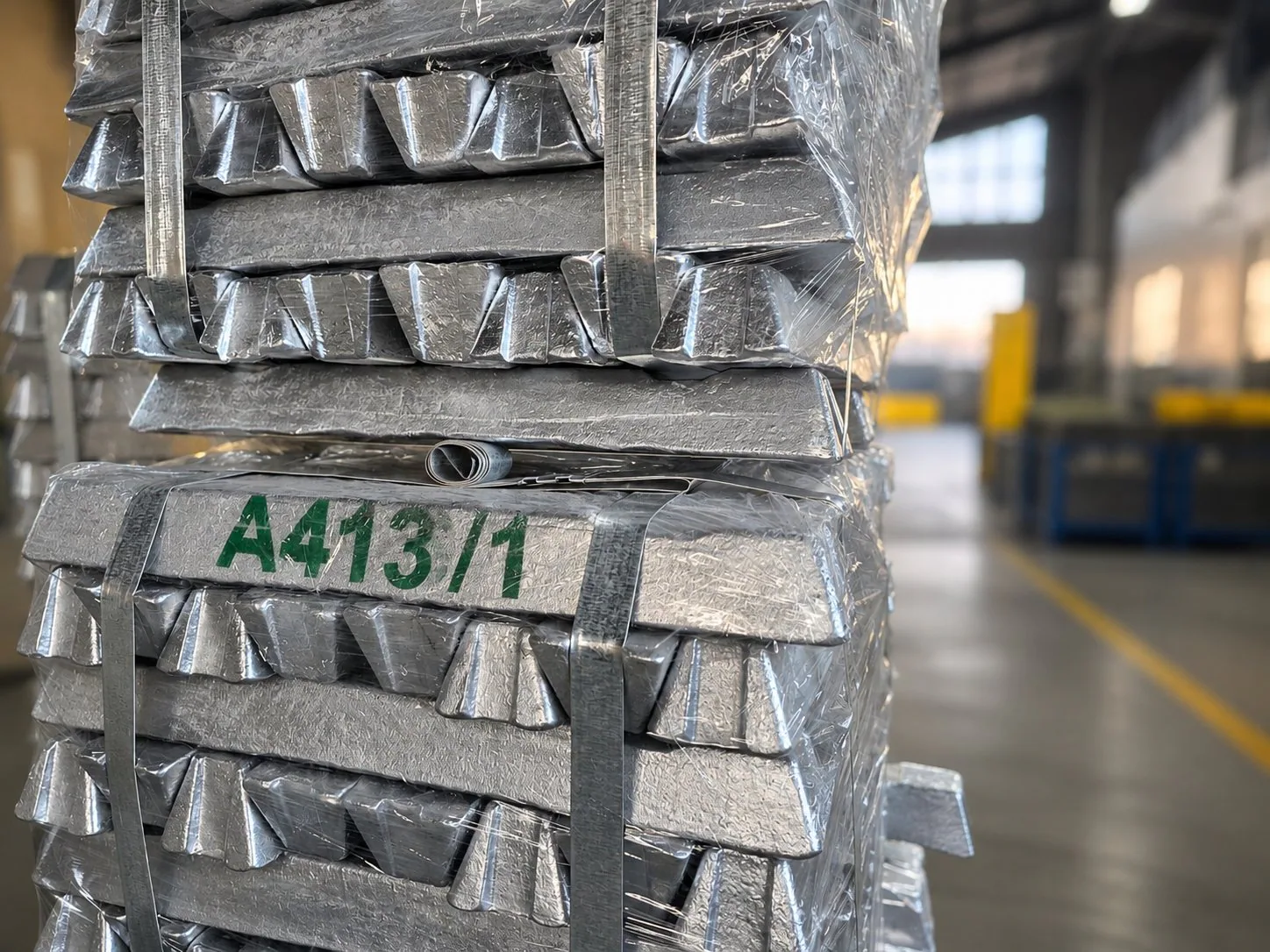
Material type, recycling route, and control method are defined by the target grade and project conditions.
Review the standard and customer specification, then select project-appropriate material.
Segregate material streams and identify unknown scrap through spectrometric analysis.
Weigh materials, define the charge plan, and record furnace inputs.
Prepare the melt and adjust its composition to the target technical range.
Sample the melt and measure its composition with the ARUN PolySpek spectrometer.
Release the approved melt and retain a metal sample bearing the same melt ID.
Material is selected from the part specification and sourced through one of the approved routes.
Internal returns and purchased scrap are managed through separate routes.
Central equipment and machine-side furnaces support the aluminum melt-preparation route.
Every aluminum melt is analyzed before release, and a sample is retained for future reference.
During the part-production review, the grade, material-supply route, and required controls are defined before production begins.